The Ormulum
The Ormulum is a Middle English biblical commentary written in the 12th century by an Augustinian canon named Orm (or Ormin). It retells and explains sections of the Gospels in verse, designed to help priests preach correct doctrine.
The name comes from: Orm (the author) and -ulum (a Latin diminutive suffix). So Ormulum basically means “Orm’s little book” or “Orm’s work.”
Orm was an Augustine monk of Lincolnshire in England. He spent some 20 years translating the gospels into modern (12th century) language in the form of verse. He added his own embellishments offering advice for kings, priests, soldiers, and others.
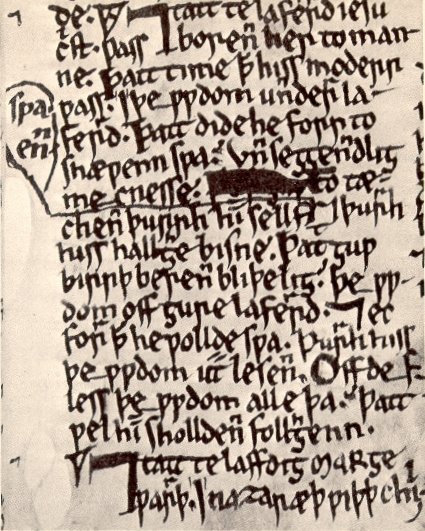
Source: Wikipedia
He called his book the Ormulum, we know that because he wrote this phrase in it:
"þiss boc iss nemmnedd. orrmulum; / Forr þi þatt orrm itt wrohhte."
- This book is named Ormulum ; for (this, that) Orme it wrote.
('þ' is the letter thorn, it is pronounced 'th').
It was written at a time when the Saxon language was undergoing major changes because many of the population were Danes or Norwegians, so he had to develop his own rules for spelling and grammar.
His book is still much studied at Universities throughout the world, it is used as an example of calligraphy and by students of early languages. If you search the Internet for 'ormulum', you will be presented with a long list of documents produced by Universities that have studied the book, and possibly an on-line translation of his work.